
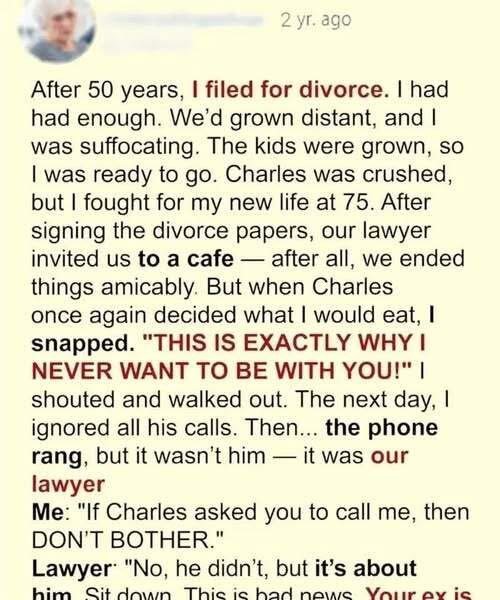
After fifty years of marriage, a seventy-five-year-old woman finally acted on a long-buried desire for emotional freedom by filing for divorce from Charles, her husband of half a century. Their relationship had deteriorated into a quiet, suffocating existence marked by emotional distance and routine rather than intimacy, laughter, or connection. Her decision was not born from anger or betrayal but from a realization that she had become a shell of herself, and she hoped that in the time she had left, she could reclaim her sense of identity.
When she told Charles she wanted a divorce, he responded not with anger but with deep sadness, accepting her decision without resistance. He moved out the next day, and the divorce process was swift and civil. After signing the papers, the couple shared a final coffee with their lawyer, a symbolic gesture of closure. But when Charles ordered for her, a habit that had always irritated her, she reacted explosively, shouting at him before storming out.
That night, Charles tried calling repeatedly, but she ignored him, wanting the distance she believed she needed. The next morning, when the phone rang again, she assumed it was him and answered harshly—only to learn from the lawyer that Charles had suffered a massive heart attack and died. The news shattered her, and memories of their shared life flooded back with painful clarity, revealing the depth of their history and the quiet ways he had cared for her.
At the hospital, she received his belongings, including a letter addressed to her. In it, Charles admitted he had often failed to listen and held too tightly out of love, never with the intention of making her feel small. He expressed his enduring love for her and hoped she would find the freedom she sought.
Reading the letter, she realized too late that her resentment had blurred the truth: she had loved him deeply, and freedom without closure had become another form of imprisonment. She learned a devastating truth—love is not always lost in marriage; sometimes it slips away because we believe there will always be more time.







Leave a Reply