
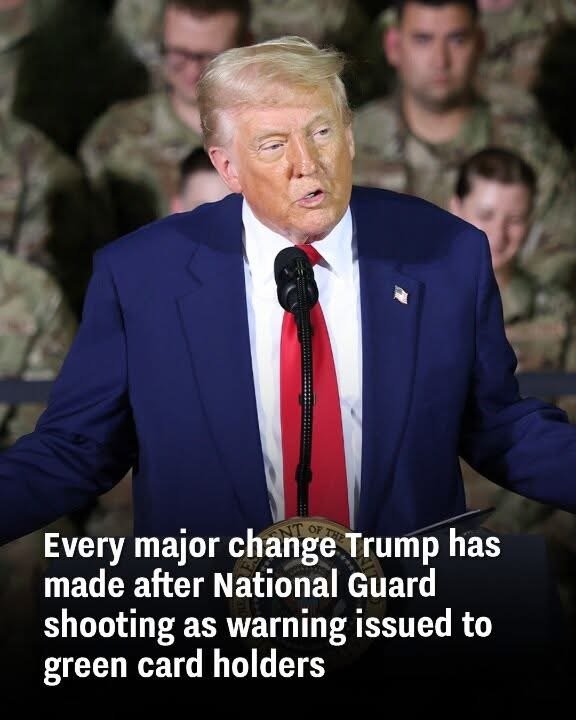
Following the deadly shooting of two U.S. National Guard members near the White House, the Trump administration implemented rapid and sweeping changes to national immigration policy. The incident occurred on November 26 and immediately intensified political scrutiny surrounding asylum, refugee vetting, and national security. What began as a tragic act of violence quickly escalated into a catalyst for some of the most aggressive immigration shifts in recent years.
Army Specialist Sarah Beckstrom was killed, and Air Force Staff Sergeant Andrew Wolfe was critically injured in the attack. The suspect, Rahmanullah Lakanwal, a 29-year-old Afghan national, was arrested and later charged with first-degree murder. Lakanwal had entered the United States in 2021 under a settlement program intended for Afghans who assisted U.S. forces and was reportedly employed previously as a CIA contractor, a fact that fueled questions regarding the reliability of vetting procedures.
In response, Secretary of War Pete Hegseth authorized the deployment of 500 additional National Guard troops to Washington, D.C., raising the total presence in the capital to approximately 2,500 personnel. The expanded force was intended to support local law enforcement and reinforce security around federal buildings and high-risk areas.
President Trump simultaneously announced an immediate suspension of all Afghan asylum claims. Shortly afterward, USCIS extended the suspension to all asylum requests, regardless of nation of origin, pending a comprehensive review of screening processes and security protocols. The administration framed this as a temporary but necessary step to prevent further threats.
Additional policy changes targeted migration from what the administration called “third-world countries.” Officials declared that federal benefits and subsidies for noncitizens would be terminated, focusing on migrants not considered economically beneficial. Nineteen countries—including Afghanistan, Haiti, and Venezuela—had already been flagged for expanded restrictions.
The administration also ordered a nationwide review of green cards and legal permanent resident status for individuals from these countries. This process could result in revocations for those deemed security risks or “public charges.” Collectively, the rapid changes represent a significant tightening of immigration rules that could affect millions living in the U.S.





Leave a Reply